
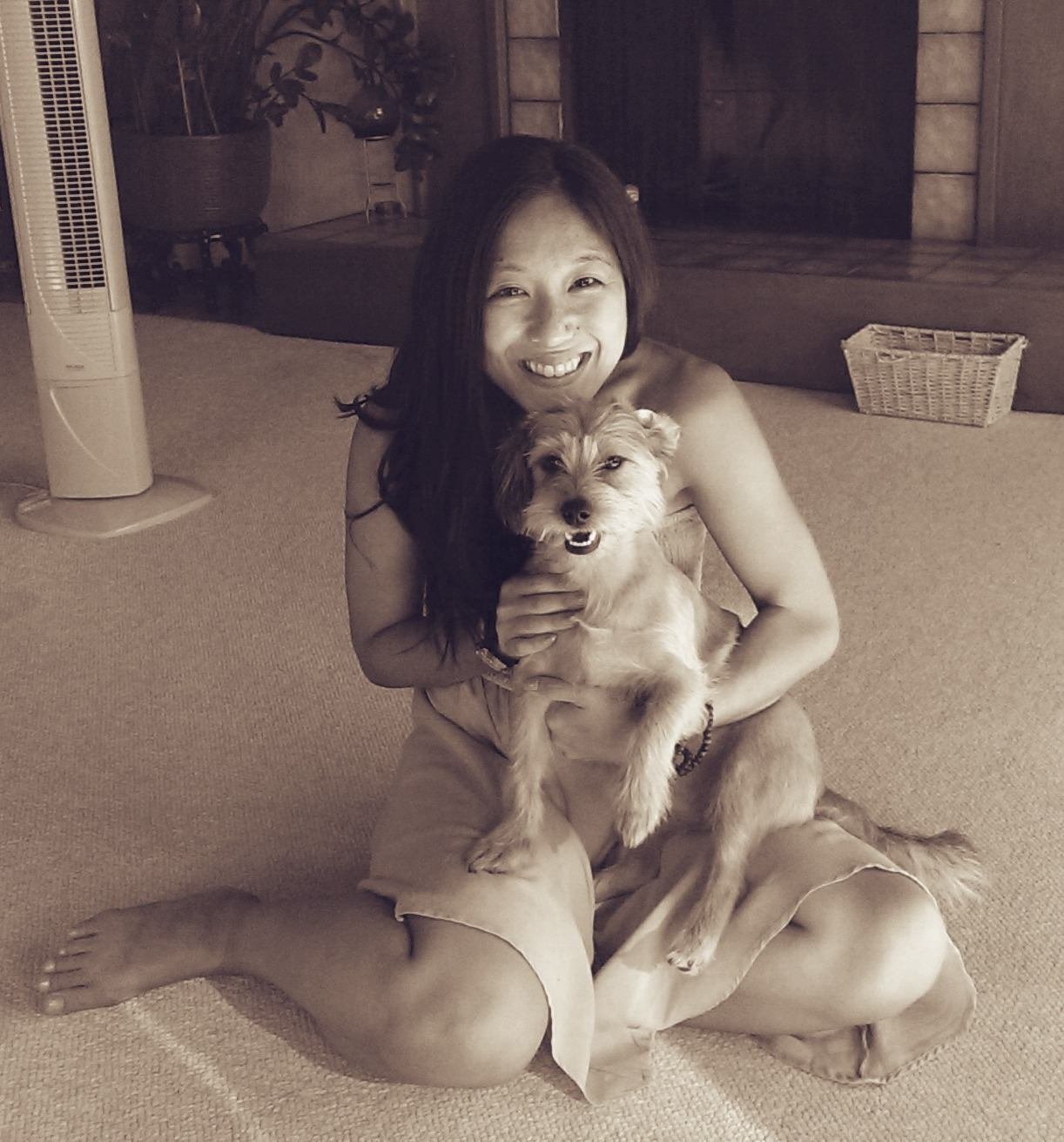
Guest Spotlight: Christine Tran
Meet Christine! She is a dedicated Flowgi and a joyful presence around the studio. Read on to learn about her current practice and her first yoga experience.
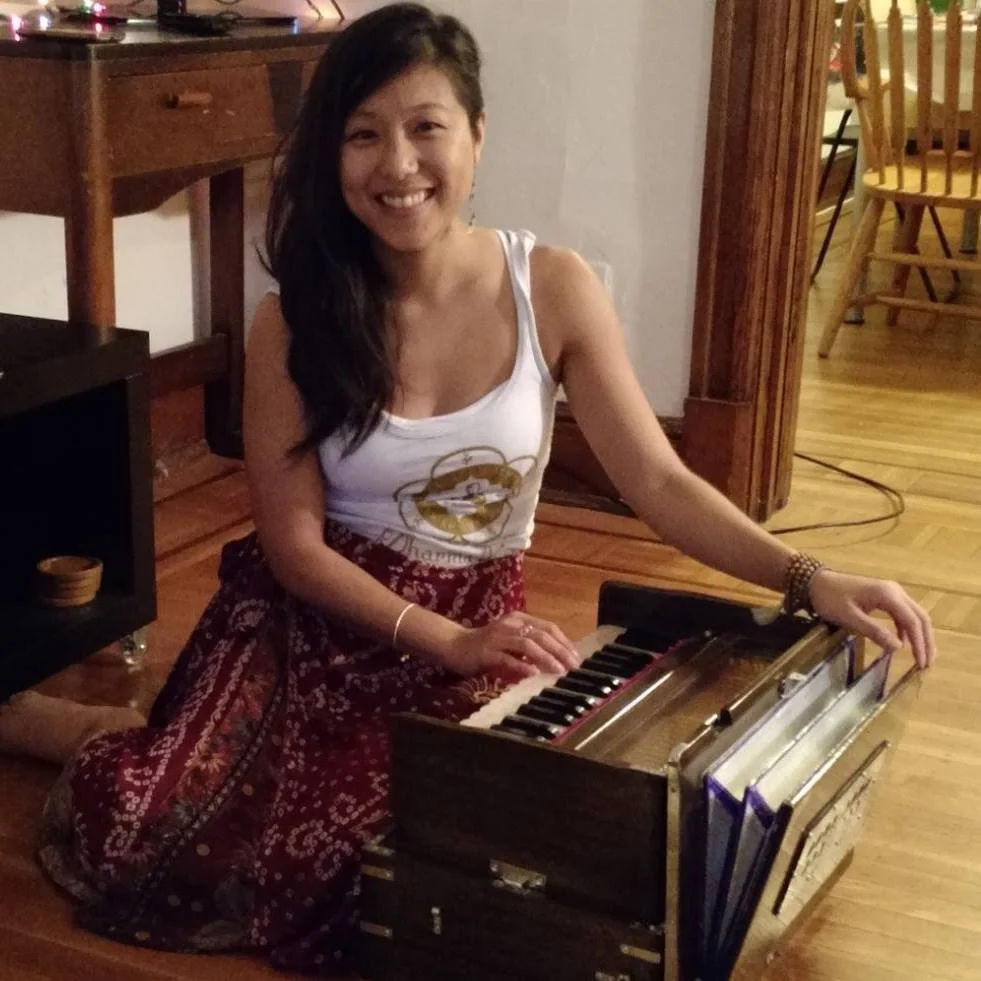
Meet Christine! She is a dedicated Flowgi and a joyful presence around the studio. Read on to learn about her current practice and her first yoga experience.
What is your current practice like and how does it fit into your daily routine?
I have a dedicated home practice on the mat every morning that links the subtle and physical practices including Bhakti (devotional) yoga, functional and meditative movements, restorative yoga, qi gong and reiki. Each day may look different and the length of time varies from 5 min to 60 min. or longer depending on what I need when I wake up and my schedule for the day. Some mornings are harder to focus and stay present, but I never walk out the door without some kind of grounding, centering, clearing, and connecting with the universe and universal life force. It can be as simple as chanting mantras and a couple of qigong movements. I also attend at least 2 classes/week at Flow Yoga with my favorite teachers.
What inspires you to practice at Flow?
The incredible, caring, and inspiring teachers, who I practice with at Flow Yoga Center - Alicia, Aqeel, Brittanie, Sam, Clare, and Cory. The new friends I've made from the Flow Yoga community, who share the practice, receptivity, curiosity, and exploration of yoga in the classroom and outside of the classroom. It's a place that holds space for me and others no matter what is happening in the world and in our lives. The teachings are always relevant, at a deeper and often subtle level. The community inspires and helps me grow personally and spiritually. I always feel more alive, present, stronger, and connected after walking out of Flow Yoga.
What was your first yoga experience like?
My first experience is the complete opposite of how I feel about yoga now. A friend talked me into trying a class when I was traveling in Costa Rica. I didn't know what I was walking into, but was curious enough to try it. The entire class felt like I was lost in a dance choreography. The teacher was kind but didn't spend any time to guide beginners like myself. I didn't understand the practice or what we were doing. It wasn't my fondest memory of yoga, but looking back now it did teach me to be present because that was the only way I could make it through the class. It couldn't have been that bad because I'm still practicing more than a decade later and loving it!
Who are some of your most influential teachers?
My most influential teachers are Dharma Mittra and teachers who have studied under Dharma - Alicia Moyer, Brittanie DeChino, Aqeel Yaseen, and Hannah Allerdice. My Yoga Therapy and Reiki teachers and my parents who taught me by example of what I was taught as the core principle of yoga - Ahimsa or compassion/non-harming and karma yoga aka selfless service. They all have been a part of my spiritual growth and understanding of what it means to be here in this lifetime.
What is something the Flow community may not know about you?
This question took me back to my fondest memories of elementary school. I spent every recess playing my favorite game of double dutch, jumping and singing rhymes to the game. I can still remember the familiar jumps, turns, and tricks in my body after all these years. I remember very distinctly how every time I overthink or try too hard, my feet would catch the ropes. As soon as I let go of the fear of getting hit by the ropes, I caught onto the rhythm and moved along with the turning of the ropes. It was probably one of the first times that I can remember experiencing surrendering and being present in the midst of movement. Double dutch may be my "first" experience of yoga. This inspires me to get back to playing double dutch!
Anything else you would like to share?
I'm so grateful to be a part of the Flow Yoga community. Taking classes and practicing next to friends at Flow Yoga is a highlight of my week and is what I do for self-care. I prioritize and plan my schedule around my favorite classes. Thank you!
What makes for a transformative yoga class?
Have you ever experienced an unforgettable feeling on your yoga mat?
Maybe it’s a heart-opening, tear-inducing backbend, when you’re least expecting it.
Maybe it’s the realization that you’ve been completely swept up in the flow and, for at a least few moments, you’ve left behind the stresses & busy-ness of your daily life.
I’ve spent thousands of hours on my yoga mat — alone at home, taking class, teaching class. And while all of those practices have left an imprint on my life, not everyone has been super remarkable.
But many have.
After nearly 20 years of practicing yoga, I still carry with me the feeling of some of the most transformative yoga classes I’ve ever taken & taught.
Have you ever experienced an unforgettable feeling on your yoga mat?
Maybe it’s a heart-opening, tear-inducing backbend, when you’re least expecting it.
Maybe it’s the realization that you’ve been completely swept up in the flow and, for at a least few moments, you’ve left behind the stresses & busy-ness of your daily life.
Maybe it’s that moment in savasana when you feel completely at home in yourself.
Or it’s emerging from a yoga class, having finally figured out the answer to a problem that has been nagging you for a while — without having actually spent any time worrying about it or thinking about it during class.
What makes for a yoga experience like this?
What stands out for me when I look back on my own transformative yoga classes isn’t so much… the pose we were doing, the song that was playing, or anything else that happened on that day.
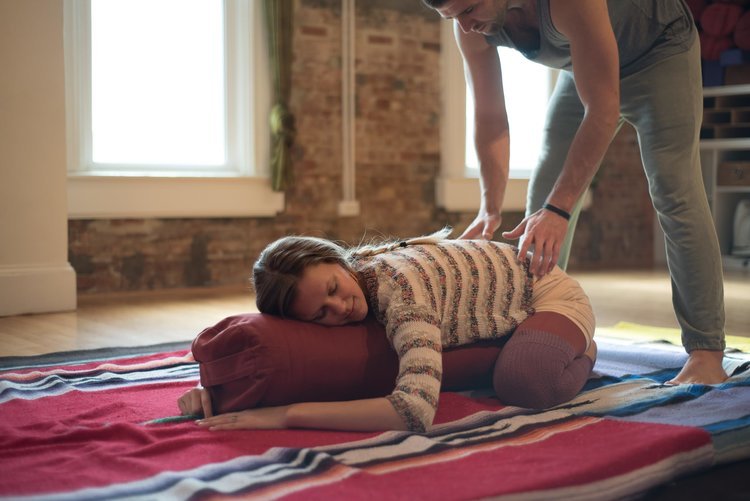
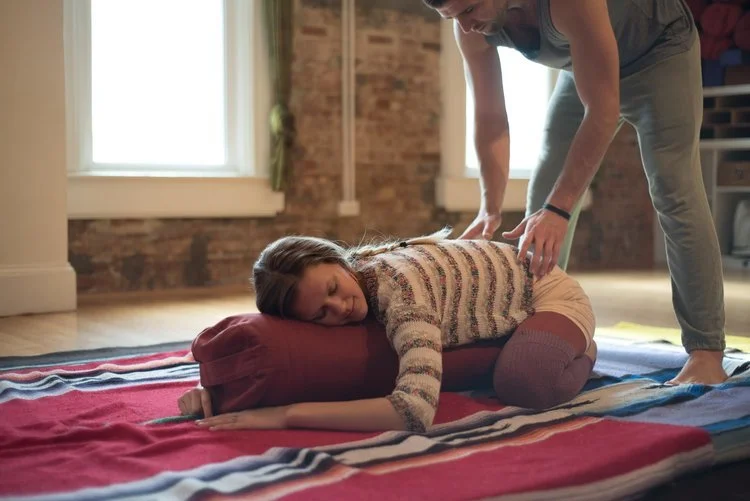
It’s the quiet aspects I remember most: the surge of an emotion, the subtle shift of a feeling state, the way the sunlight danced across my mat, the gentle, yet sturdy touch of a hand offered in a simple child’s pose assist, the feeling of being seen & noticed, yet given space to have the experience I needed to have, to learn the lesson on my own.
At the helm of every transformative experience was a yoga teacher who could all at once offer her deep knowledge (from the anatomy to the energetics to the alignment to the history of yoga) with her own embodied experience of the practice & offer it to the class as shared wisdom of an ancient, universal practice brought to life in that particular moment & place.
These are the teachers who can create safe space, an authentic offering, and still leave room for their students to learn at their own pace and have the exact experience they need to have — all without ego, dogma, or attachment to a specific outcome.
If that sounds like the kind of teacher you want to be, Teaching from the Heart was designed with you in mind.
A 100-hour Yoga Training & Mentorship program we created to help you transform the yoga you love to practice into yoga you can lovingly share with others.
Whether you are already teaching yoga or simply want to share it with your friends, family, and colleagues, this program will give you the tools you need & the support for your own transformation into a yogi who can practice & teach from the heart.
Teaching from the Heart will help you create transformative yoga experiences for yourself & others.
To learn more about Teaching from the Heart & apply today - read on here.
We’d love for you to join us & our early bird pricing ends November 1.
xo Cath & Sam
Manager Spotlight: Stephanie Seiler
Meet Stephanie! She is a senior manager with Flow and a member of our Happiness team, taking care of our Flowgis. Read on to find out her dream dog and how she got into yoga.

Meet Stephanie! She is a senior manager with Flow and a member of our Happiness team, taking care of our Flowgis. Read on to find out her dream dog and how she got into yoga.
What is your current practice like and how does it fit into your daily routine?
Yoga is something that I have to prioritize and make part of my regular routine because it has so many benefits on my well-being. Currently I practice at Flow 3-4 times per week, which usually includes a vinyasa yoga class after work and a vinyasa or flow fit class after my Flow shift on Wednesday! I love getting in a variety of classes when I can and switching it up with a pilates or ashtanga class a few times per month. Coming to Flow is the perfect way to end my workday and if I don't have time to make it over to the studio sometimes I do a self led practice on my small balcony at home :)
What inspires you to practice at Flow?
There are SO many things that inspire me to practice at Flow! From the moment I first stepped into the studio I was greeted so incredibly warmly and immediately felt welcomed into the amazing Flow community. The positive energy and warmth is infectious and can be such a wonderful respite from the busy, fast paced, and at times intense energy that surrounds us in DC. Also, the variety of teachers and types of classes at Flow have inspired me to move out of my comfort zone and try classes and yoga postures that I wouldn't have been drawn to otherwise!
What was your first yoga experience like?
I attended my first yoga class apprehensively based on friend's urging and definitely wasn't yet buying into yoga and how amazing she kept saying it was. I remember being surprised at how challenging the class was and how much strength it required. It wasn't until I started attending a yoga studio regularly in upstate NY, after having moved there with my husband, without a job and a lot of time on my hands initially, that I truly discovered my love for yoga. I was hooked immediately and loved the combination of challenge and calm that I got from my practice. I also remember my first class there being the first time I ever took a heated class and being completely sweaty and unprepared!
Who are some of your most influential teachers?
This is a such a hard question because there are so many amazing teachers who have had an influence on me! My love of yoga started at a Baptiste affiliated studio in NY, which is also where I did my teacher training, so I was hugely influenced by several teachers there at the beginning of my yoga journey. Here at Flow I am inspired and challenged by so many teachers which has definitely provided me with a more well rounded and intelligent practice.
What is something the Flow community may not know about you?
Hmm something people may not know about me....I lived in the state of NY for 11 years before moving to DC (in NYC, Queens, and Rochester) so even though I grew up in the MD/DC area, NY still feels like my other home. I know DC tends to be a pretty transient place so it's nice being somewhere where I think a lot of people can relate to this!
Also, I love pugs and hope to have one someday :)
Anything else you would like to share?
I love Flow and feel so grateful to be part of the family!!
Asthanga 101 - Your Questions Answered.
Curious about Ashtanga Mysore? Read on for Jen Rene’s Astanga 101 guide and get some of the most popular questions answered!
So do I practice every single day? What if I don’t feel well?
So do I practice every single day? What if I don’t feel well?
So do I practice every single day? What if I don’t feel well?
I cannot wake up in the morning — help!
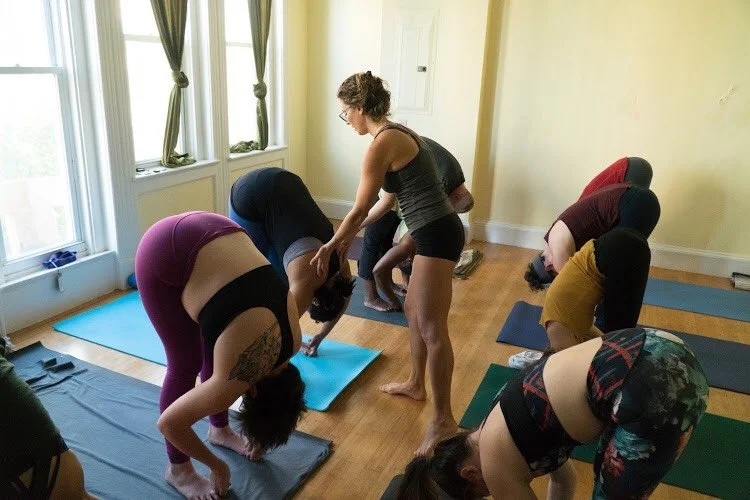
Jen Rene leads Myore at Flow Yoga Center
So do I practice every single day? What if I don’t feel well?
This is actually such a common question that I wrote an entire blog on it, called When to Practice and When to Rest. And there are plenty of times when you should rest — like if you have a fever or an acute injury. But there are also plenty of times when you’ll probably feel like resting but should actually still practice, like when you are sore or tired.
Do you do anything other than yoga for exercise? (Or some variation of this.)
I always tell students to do what they love. Whether that’s climbing, surfing, riding, hiking, playing football, or staying out late dancing and drinking – by all means, do it. But just remember, like with anything in life, there are tradeoffs and what you do off the mat will have its effects on your practice. It’s important to remember this, and to be realistic about it. Pursuing other athletic endeavors might make you feel tight in certain places, or more fatigued, or stronger or better balanced. Just continue to check in with your body and do what works for you. Personally, I have always enjoyed some Pilates for additional strengthening, and foam-rolling to loosen up my fascia. When I was working through really tight areas of my body, I would do some yin stretches at home in the evenings. And I make sure to never skip a hike, bike ride, or adventure just because I was worried about my practice the next day.
Can I practice other styles of yoga?
Again, do what you love – if that’s practicing other styles of yoga, then go for it. In my experience teaching and practicing, though, I’ve found that practicing more than once rarely leads to faster progression and frequently leads to injury. What’s more, I believe that you can only make the most of an Ashtanga practice if you commit to it, and students who consistently dabble in other styles of yoga tend to be less likely to practice the optimal five to six times a week. This seems most likely to be a function of scheduling – if you go to a vinyasa class in the evening that finishes at 8pm, get home at 8:30, eat dinner, unwind, etc., the chances are much lower that you’ll feel like returning to your mat for a 7am Ashtanga practice! Like I said in the previous question, be realistic about the effects that other activities and practices will have on your Ashtanga practice, and do what feels like it lines up with you and your life.
I cannot wake up in the morning — help!
You and me both. In my career, I’ve slept through my alarm when I was meant to be teaching four times — and let me tell you, waking up late is absolutely a jolting start to the day. I know I’m never going to be an early-morning person, but I have still found a way to make this practice work for me. I also wrote a blog about this because it is quite common when starting an Ashtanga practice: How to Optimize Your Morning (When You Aren’t an Early Morning Person!)
How do I go to bed early?
It may seem obvious, but the easiest way to wake up early in the morning (and feel okay about it) is to go to bed earlier! There are a lot of pulls on our attention in the evening – going out with friends, watching an episode or two (or five) of your favorite TV show, getting caught up on household chores, and a million other things. But when you commit to a discipline like Ashtanga, and when you want to commit to a discipline and the changes it can require, your life tends to shift around to accommodate it. My suggestion is to set a routine around bedtime and stick to it. I also wrote a blog post on this, which you can read here: Early to Bed.
What does it mean to split your practice?
In the Ashtanga method, poses are taught one by one. Once you have finished and achieved a level of proficiency in the primary (or second or third) series, you begin to add postures from the next one. These postures accumulate piece by piece, one by one, so eventually you will be practicing all of primary and the first half of second – this is a long practice! It makes the student stronger and gives the muscles plenty of time to warm up for the increasingly difficult postures of second series. At some point, the student splits their practice, and would no longer do all of primary before second series. This makes for a much shorter practice, so it is important to put in the work leading up to this point.
Why do teachers “give” you poses?
This is a tough question to answer. I think that it is firmly rooted in tradition, and I think it’s especially important to address this given the current climate of heightened awareness around teacher/student dynamics. “Giving” students postures should be reframed as “teaching” students the postures; giving a student a posture shouldn’t be about a teacher withholding a posture, or about any type of power trip. A good teacher teaches a student a posture when the teacher believes that a student is ready to continue and practice that posture safely. Ashtanga is an edgy practice – the postures get increasingly difficult, and there is risk of injury if a student moves through them too quickly. A good teacher will keep a student both from stagnating and from moving too fast. The teacher will recognize habits in the student, help to build healthy and sustainable patterns, and help keep the student honest with themselves. If you’re wondering how to find the right teacher who can help you with this, maybe my blog can help: How to Find a Genuine Teacher.
How do I practice when I am on the road?
One of the beauties of an Ashtanga practice is that you learn the sequence inside and out, so you don’t have to rely on a teacher every step of the way – rather, you carry your practice with you everywhere you go. This makes it significantly easier to practice when traveling, because all you really need is a little bit of space to practice in. Just be compassionate with yourself. You don’t need to push it after long flights, and you don’t need to put pressure on yourself to try to squeeze in a full practice when you only have a short amount of time. If all you have time for is 3 As and 3 Bs, then that’s good enough. When you are practicing while traveling, the point isn’t necessarily to make great breakthroughs or have transformative practices. If you do, awesome. But the goal is to maintain your practice that when you are back home and back in the routine you can pick up where you left off. Don’t put too much expectation on yourself – just bring a mat and the clothes you need, so that you’re more likely to make it happen. My go-to travel mat is the Manduka eKO SuperLite – it folds up to the size of a shirt, so you can squeeze it into any bag, which I love. I don’t use it for rigorous practices, but when I am on the road it does the trick.
Can I eat before practice?
I typically advise against it, but go ahead if you are very hungry or low energy and feel like you have to eat first. I always eat dinner to help me manage my morning hunger in advance – as you get deeper into the discipline of your practice, you learn little lifestyle hacks like this to make it all a little more manageable day-to-day. My friend Annette, who’s an Ayurvedic health coach and fellow Ashtanga practitioner (and whose site can be found here), suggests eating a small amount of food, like a date stuffed with almond butter, before practice. The natural sugars, protein, and fat will help see you through your practice and prevent your blood sugar from yo-yoing.
Do I have to be vegetarian?
Although vegetarianism is the preferred diet for a lot of practitioners, you don’t have to be anything! You can drink alcohol and eat meat and cheese and sugar, if you want to. Dietary habits are extremely difficult to modify, and often change much later than other habits. But here’s the thing: It’s not about what someone else tells you to do; it’s about what your body tells you to do. More often than not, changes in eating habits just naturally accompany the practice. Part of what happens in our yoga practice is that we become more attuned to our bodies and how we feel. We notice how certain foods make us feel, and we become more compassionate toward ourselves. So, changing your eating habits will likely happen just because you want to wake up feeling energized, or strong, or lean. Maybe you are always going to need meat in your diet, but you might decide to shift to more grass-fed, free-range, fulfilling meat sources. My suggestion is that you don’t force anything and don’t make any changes because you feel that you “should.” Let the changes happen organically.
What’s the deal with not drinking water during practice?
When we practice Ashtanga, we are trying to warm our bodies from the inside out. In a sense, drinking water during our practice can put out the fire we’re trying to kindle. Typically, rather than drinking water during the practice, I suggest drinking a lot the evening before, some in the morning before practice, and lots after practice. Of course, there are exceptions to every rule. Please don’t pass out from dehydration just because you are worried about putting out your tapas. Drink if you need to drink, especially if you are practicing in a hot room, are pregnant, or are dehydrated to begin with.
What is the opening mantra? Do I have to say it? How do I learn it?
The opening mantra is what establishes our practice as more of a spiritual workout than a physical one. When we chant the opening mantra, we set the intentions for our efforts, and we recognize and express gratitude for the lineage of teachers that handed the teachings down to us. It can be difficult to learn in class, so I suggest you write it out a few times at home and study it. Check out my friend Cory’s site for more info on it.
What type of mat should I use?
I always recommend the Manduka PRO mat for Ashtanga. I got my first Manduka sixteen years ago, and I still have it. They are durable, just the right amount of sticky, and – my favorite part – they provide adequate cushion, so you know you’ll have enough support to help your wrists through 60 chaturangas and to help your back with poses that might otherwise make the spine feel vulnerable (like the rolling postures at the end of primary). Also, these mats are thick enough to absorb some of the shock when you transition to chaturanga from a headstand or other such pose. I suggest the standard length, but yogis taller than six feet might be more comfortable using the extra long mat.
Can I have more than one teacher?
I am working on a blog post dedicated to this question and will go into more detail there, but you certainly can if that’s what feels most aligned to you and your practice. I think it’s wise to be careful about receiving conflicting information, and I see the logic behind sticking to one method or teaching long enough to give it the chance to work; on the other hand, there’s enormous value in having more than one perspective on your practice (just like with anything in life!). Different teachers are going to see different things, teach from different experiences, and offer you different insights. It’s a long journey ahead – I think we can agree we want all the help we can get.
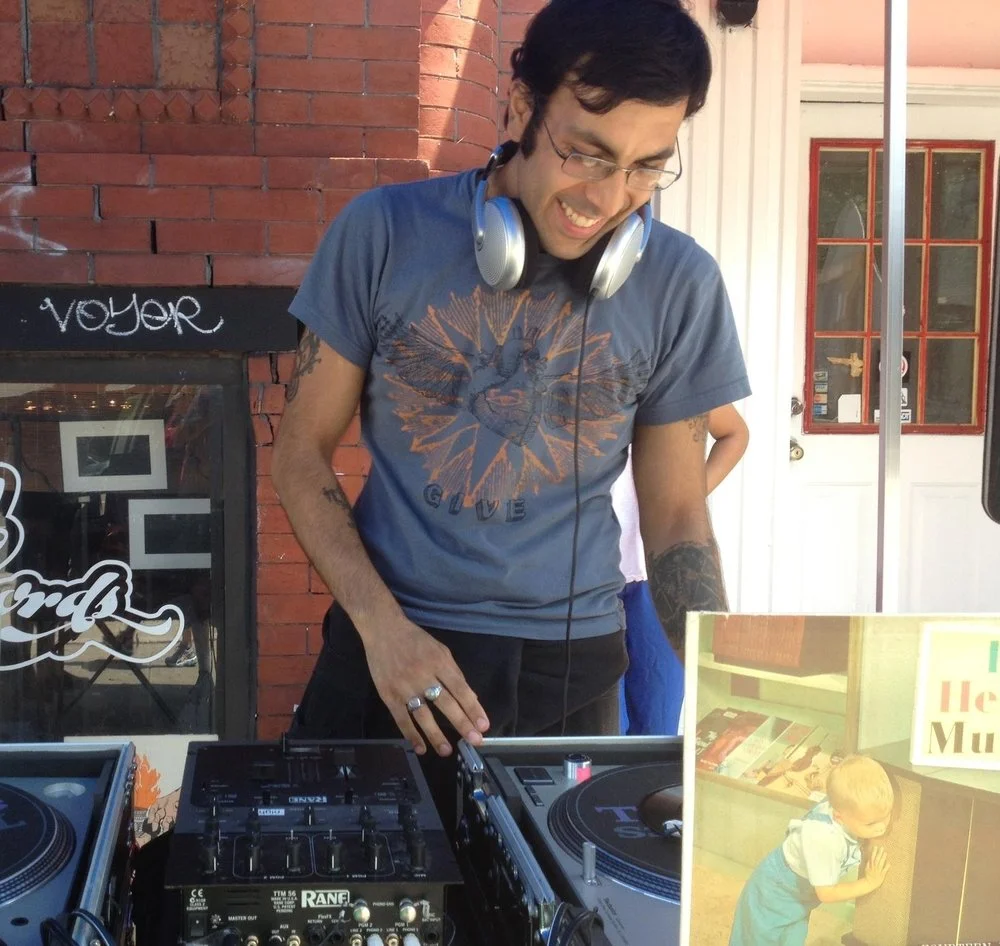
Teacher Spotlight: Aqeel Yaseen
Meet Aqeel! A dedicated yoga & meditation practitioner, Aqeel has been teaching since 2010. Learn more about what inspires him & feeds his daily practice.
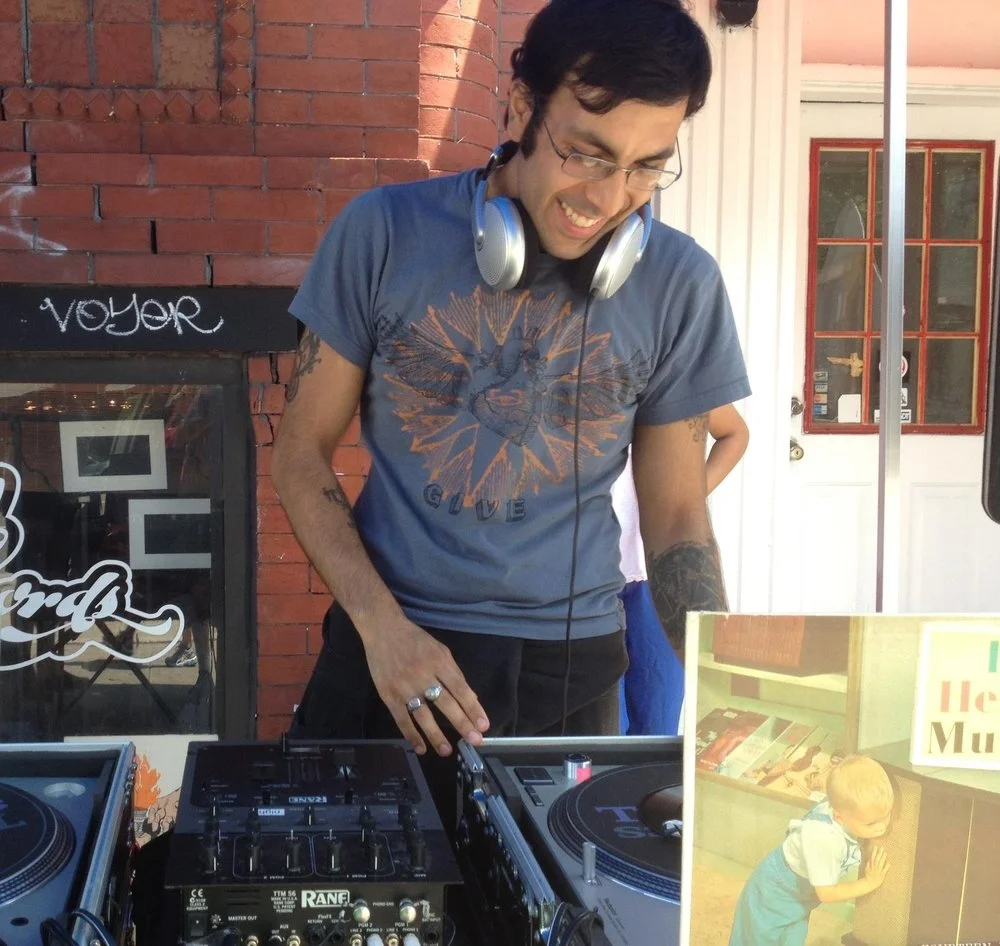
Meet Aqeel! A dedicated yoga & meditation practitioner, Aqeel has been teaching since 2010. Learn more about what inspires him & feeds his daily practice.
What is your current practice like and how does it fit into your daily routine?
Over the last 15 years it has changed as my life shifted from a means to feel good about being alive in my own skin, to celebrating the opportunity to exist as a living being. When I began practicing at over 300lbs, my desire was for a healthy and comfortable body and a retreat from the anger, sadness, and depression that colored my mind. As time passed and more of my life has become devoted to practice, I have spent between 3 to 5 hours every day practicing breathing, postures, and meditation. As a more intellectual personality, I spent as much time reading and contemplating as time would allow. Currently, I practice between 2-3 hours daily, and mostly look for ways to serve others in either teaching yoga to kids, deeply listening if someone wants to talk, or offering healing/tarot sessions.
What inspires you to practice at Flow?
I am inspired by the sincere desire to grow beyond personal, social, and historical limits. The good fortune and prosperity of living in Washington DC affords is a perfect environment to cultivate compassion and deep remembrance that peace, contentment, love, and wisdom are not products of who, where, and how we are, but are at the core of each of us. If we learn to live from that deeper inner knowing, and acknowledge and support each other in expressing curiosity, creativity, and joy we are living in service to our ancestors and the people of the future.
What was your first yoga experience like?
My first meditation experience came in 2000 out of a deep desire to come with insomnia; where the instructions or information about what to do came from I am not sure. My first yoga asana experience was spontaneously finding myself moved into yoga poses and hearing the strong message to start practicing, shortly thereafter I took my first class in community college in 2004. I started a home practice immediately. It sounds crazy, I know.
Who are some of your most influential teachers?
My most influential teachers are my ignorance, my arrogance, my doubts and fears, and the unskillful choices that come with consequences. Every harmful action, knowingly or unknowingly, brings me more insight about how to cultivate compassion and humility in my daily life. So, all my relationships offer me supreme guidance and encouragement. Of the yoga teachers I have practiced with, Sri Dharma Mittra is my constant source of inspiration and instruction. Locally, my friends Brittanie DeChino, and Hannah Allerdice Bricker, have been virtually the only teachers I have practiced regularly with. I love them for allowing me to be as weird and intense as I choose to be.
What is something the Flow community may not know about you?
I am a wizard. Seriously. Ask me about it. Also, I have been writing weekly pieces and sharing them for the the last 3 years as a way to help remind us all of our capacity for harmony, creativity, and contentment.
Anything else you would like to share?
I don't know how my life became like this. I also don't know what my life will become as time passes on. I am grateful for every day that my own ignorance does not cause my body to die. I am grateful for the chance to see the world slowly become a less violent and more compassionate and hospitable place for future generations. I am grateful for the opportunity to contribute in whatever way possible to a world of cooperative dignified co-existence.
Om.