

The Gifts Of Golden Milk
One of our favorite ways to welcome Fall is to add this warming Golden Milk to our evening bedtime routine. It's star ingredient is tumeric that boasts a whole host of healing benefits including reducing inflammation, boosting circulation, soothing digestion troubles, calming skin irritations, pain reduction, and in our family it is our go to the moment we start to feel a cold or sore throat coming on.

Golden Milk gorgous pic from: https://downshiftology.com/recipes/turmeric-milk-dairy-free/
One of our favorite ways to welcome Fall is to add this warming Golden Milk to our evening routine. It's star ingredient is tumeric that boasts a whole host of healing benefits including reducing inflammation, boosting circulation, soothing digestion troubles, calming skin irritations, pain reduction, and in our family it is our go to the moment we start to feel a cold or sore throat coming on. There are many ways to make it and below is our favorite recipe with the perfect touch of sweetness that have my kids asking for it!
You’ll need the following ingredients for 4 servings:
1 tsp ground turmeric (we love Whole Spice or a tbsp fresh turmeric root)
1/2 tsp freshly ground black pepper
2 cups of your favorite milk (almond, coconut, whole milk…..)
Add these three ingredients to a saucepan and simmer on medium light until it begins to boil. Then, turn off your flame & add 1-2 tbsp of real maple syrup. Whisk and pour into your mugs to serve.
Play with the ingredients- you can exchange maple syrup for raw honey, or add a dash of cinnamon or ginger to spice it up!
xo
Debra & Ian
ps. tip- tumeric can stain so make sure if it spills you wipe it up quickly ;)
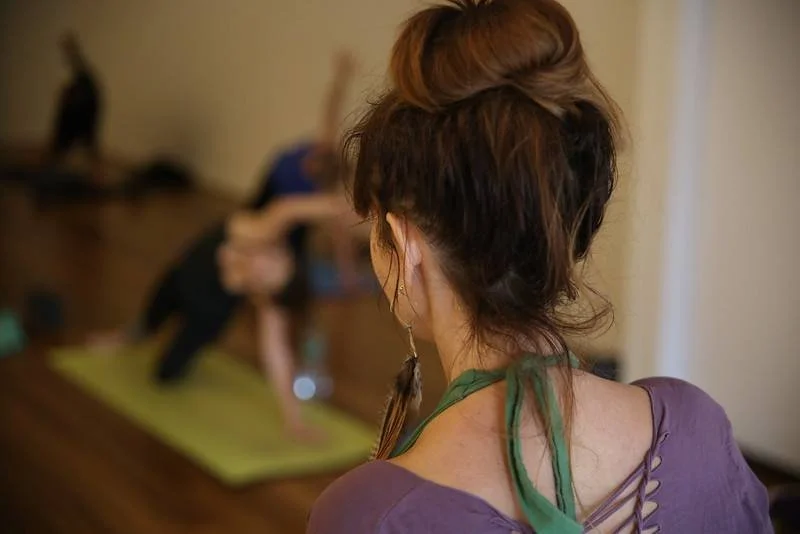
It's Ok To Turn It Off
“A never-ending stream of pictures. People who are prettier than you, happier than you, more confident than you. Weddings that are fancier than yours was, with sun-dappled trees, luscious desserts and delighted relatives. Or perhaps it’s the status updates from everyone who is where you aren’t, but wish you were.”
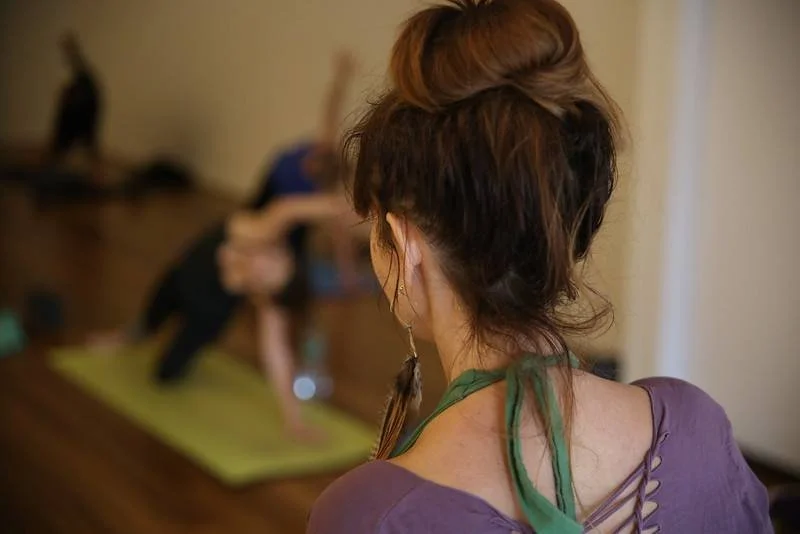
Flow Yoga Center Washington DC Debra Mishalove, photo by drew xeron
A never-ending stream of pictures. People who are prettier than you, happier than you, more confident than you. Weddings that are fancier than yours was, with sun-dappled trees, luscious desserts and delighted relatives. Or perhaps it’s the status updates from everyone who is where you aren’t, but wish you were.
And the billboards and the magazine ads always show us the people we’d like to be instead of the people we are. In the short run, gazing at all this perfection gives us a short hit of dopamine, a chance to imagine what it might be like. Over time, though, the grinding inadequacy caused by the marketing machine wears us down.
It’s okay to turn it off.
--Seth Godin
Astonishingly, the average person will spend 116 minutes a day on social media. I often wonder how this is affecting us. I don't know about you, but sometimes social media leaves me feeling inspired and connected. But other times, more often, I feel anxious and inadequate.
I am sensing others may feel this way too. And as we transition into Fall, I am also sensing a deeper longing for real connections, moments not measured by insta-photos but instead time in spaces where we feel most comfortable being ourselves.
How would it feel for you to begin to turn inward, to nourish & fortify yourself and spend less time gazing out? If this resonates with you, there are simple things you (and we) can do to shift in the direction so many of us are yearning for.
I invite you to take a few moments before you move on to your next activity, pen in hand to jot down a few ways that you will take good care of yourself this Fall. Two things that came up for me are adding a nightly yoga nidra practice and and using the freedom app to protect the time I want to prioritize for myself, work or family. If I can be of any support, please reach out - I love to help folks strategize on ways to live their best days.
Finally, I hope you will join us as we move into the collective space of our 30 Day Body Mind Challenge so we can lean on and support each other as we continue to grow. I will be participating along with Michael Danzansky & Catherine Zack and others!
I look forward to seeing you at Flow.
warm regards,
Debra

Guest Spotlight: Nate Gorence
Meet Nate! A Flowgi for the last six years, Nate is dedicated to Flow's Mysore program but can also be found in a Pilates or Rocket class. Learn more about his love of Flow & fly fishing.

Meet Nate! A Flowgi for the last six years, Nate is dedicated to Flow's Mysore program but can also be found in a Pilates or Rocket class. Learn more about his love of Flow & fly fishing.
What is your current practice like and how does it fit into your daily routine?
My practice is focused on Ashtanga and Pilates, but I mix in a few other classes here and there. I aspire to make Mysore every morning, but, between work travel and lack of sleep, my Mysore practice is far from daily. Still, I try to get to the studio every day that I'm in town--for a led primary or Vinyasa class, or Rocket on Sunday. I also try to make Pilates 2-3 times a week to compliment my yoga practice. I'm definitely more focused, more energized, and happier when I practice daily.
What inspires you to practice at Flow?
The entire Flow community--great mix of welcoming, dynamic, and motivating teachers and practitioners.
What was your first yoga experience like?
First yoga experience was a gym yoga class in 2009. I had no idea what I was doing and could barely touch my toes. I thought it would be good to increase my flexibility after a week-long backpacking trip that left me with a little tendinitis. I gradually started practicing a few times a week until Mimi Rieger told me that she thought I would really enjoy a more consistent practice at a studio. So, I gave that a whirl and haven't looked back. I think I've been a Flow member since 2011, which is hard to believe.
Who are some of your most influential teachers?
Whoo, I have a lot. The Flow Ashtanga clan: Jen Rene, Gail Harris, Todd Anderson, Cory Bryant, Nicole Kaib, and Chris Anderson. Mimi Rieger, who got me beyond gym yoga. Jonathan Ewing for Sunday Rocket. Clare Kelley and Juliet Stovall for cringe-inducing but ultimately rewarding Pilates. David Kyle, who taught my teacher training and helped focus my Ashtanga practice.
What is something the Flow community may not know about you?
As much as I love yoga, I love fly fishing more. There are a lot of similarities between the two, but fly fishing will always be first passion.
Anything else you would like to share?
If you run to Flow, you can go easy on the first few Vinyasas.
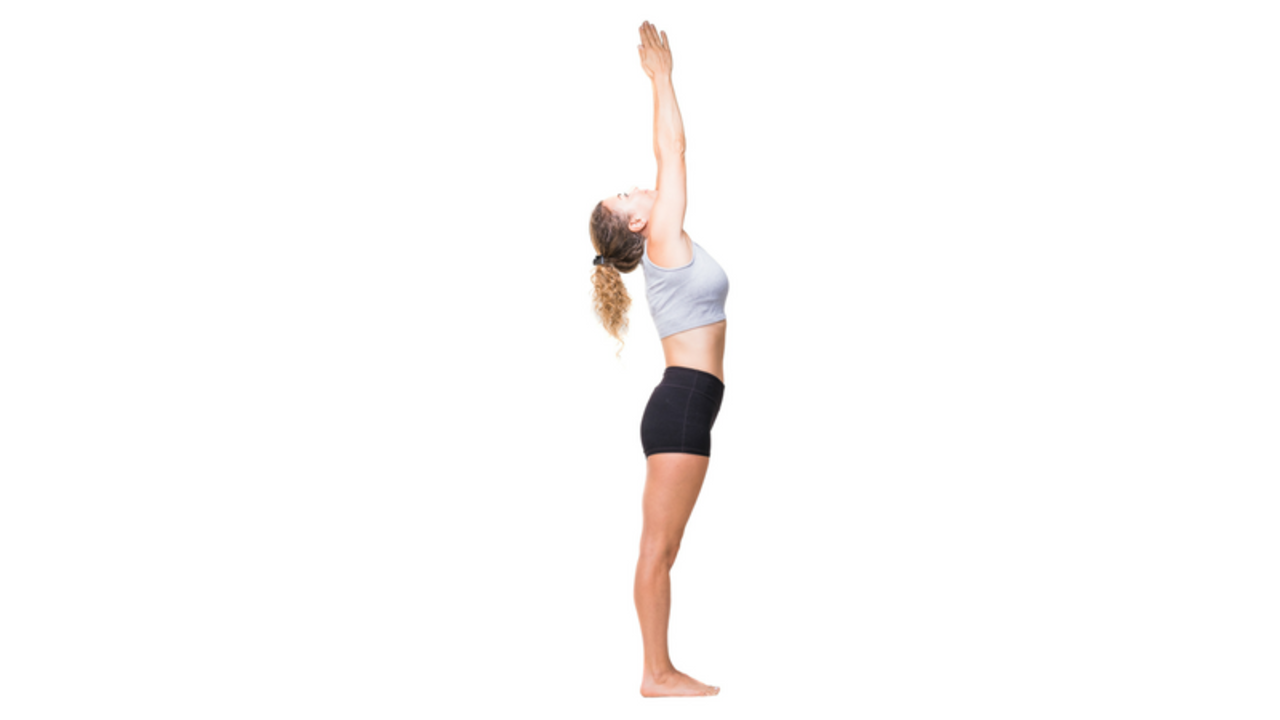
Ashtanga 101: Welcome to Ashtanga
Here’s the truth: Starting an Ashtanga practice is hard. Yoga is often misrepresented as being all happy feelings and pretty asanas, or my personal favorite “relaxing.” But the fact is that getting serious about your practice is a challenging endeavor. The thing is, though, that that’s the case with starting anything new. It makes us feel awkward and frustrated and challenged. Starting something new is a struggle.
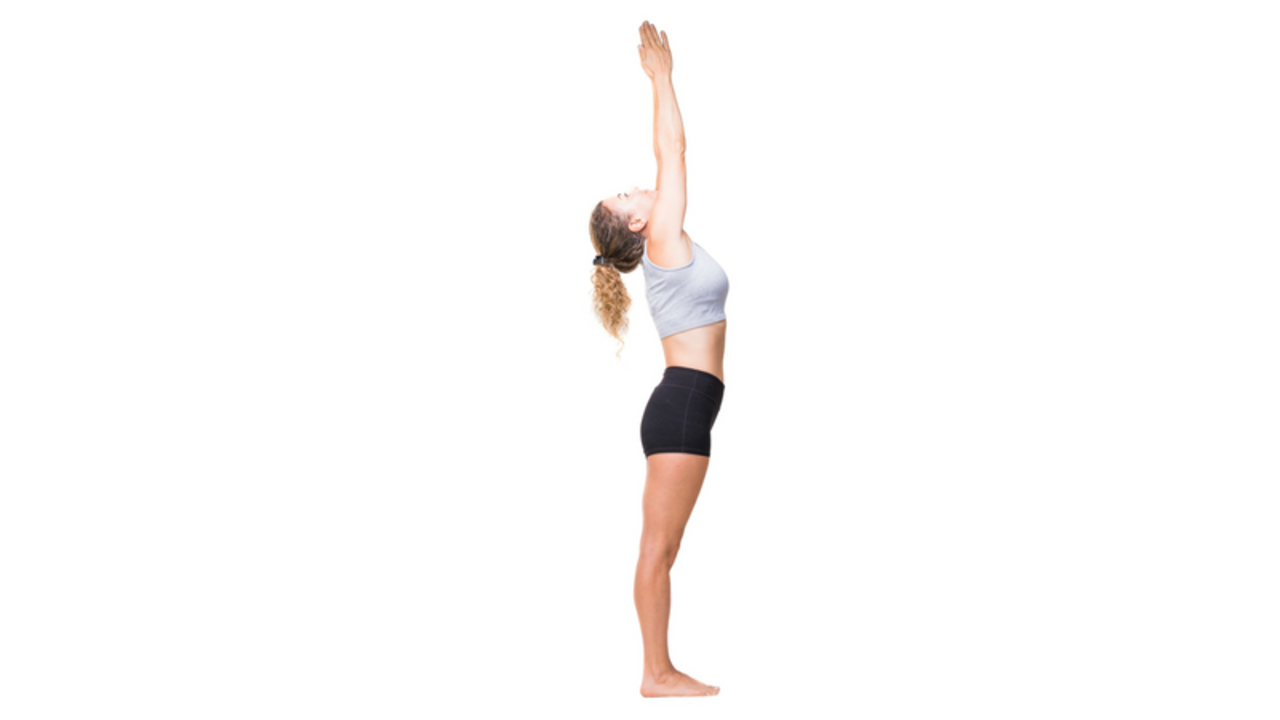
Here’s the truth: Starting an Ashtanga practice is hard.
Yoga is often misrepresented as being all happy feelings and pretty asanas, or my personal favorite “relaxing.” But the fact is that getting serious about your practice is a challenging endeavor. The thing is, though, that that’s the case with starting anything new. It makes us feel awkward and frustrated and challenged. Starting something new is a struggle.
A big part of an Ashtanga practice is learning to honor the struggle.
Unfortunately, the struggle is a hard sell. Yoga is sold as a feel-good, relaxing experience, when the truth is that a daily Ashtanga practice will make you work. There will be a lot of difficult steps along the way and there will probably be days that you don’t want to practice.
The benefits of an Ashtanga practice, though, far outweigh the struggles that they grow from. If you engage wholeheartedly, your practice will change you – first it will change your body, then it will change your mind, and then it will change your behavior. And that’s when it starts to change your life.
Strictly speaking, an Ashtanga asana practice is six asana sequences that are practiced with prescribed drishti, breath, and duration, and a pranayama sequence that is equally well defined.
When you start an Ashtanga practice in the Mysore setting, you start small. You don’t need to have all of primary memorized, in face you don’t have to have any yoga experience at all. You don’t have to be flexible or strong — your body will change with practice. Trust that you’ll get there.
When I first introduce a new student to the Ashtanga practice I explain it to them the “bookends”. Each day, you start with sun salutations and the end with the last three seated postures. These are the bookends. They’ll always be how you start and finish your practice, but what will change over time is what happens in between them.
Your teacher will show you the postures one by one. When you come to practice, repeat the practice that you have been taught; when you get to the last pose you know, go to your finishing postures. It might seem tedious sometimes, and it might look like you are doing the same practice every day, but it’s never quite the same. If you go through all you know every single day, you’ll get to know it that much better in both your body and your mind. The body changes with every single practice as well as with every day, and week, and month. In fact, this is one of the most important philosophical concepts we learn — that nothing in this material world is permanent. Don’t expect it to be the same every day, but rather observe the change without attachment or negativity. Part of the practice is being ready each day to work with the changing nature of your body.
The repetition that is built into the practice lends itself to transformation. You will quickly begin to feel more comfortable and proficient in the postures. You will begin to notice how the body changes from day to day. Importantly, the repetition of postures also provides us with the opportunity to not only recognize our habits, but also to change them. And then as soon as you begin to get more comfortable, a new pose will be introduced.
Initially, your practice will be short. It’s a steep learning curve and things change quickly at first. Plan on 45 minutes to an hour for your first practice. In the Mysore room, it's an open format, so arrive based on when you want to leave. If you have to be on your way to work at 8:00 and your practice takes 45 minutes, plan to start no later than 7:15. Regardless of how much time you have, though, the absolute most important thing is that you make it to your mat. This can be for five minutes or forty-five. But if you have a jam-packed day, a shorter yoga practice is always better than none.
Don’t worry about what you can’t do. If you can’t do a pose or if you forget a sequence, it’s all part of the growing process. Begin the practice of listening to your body, rest when you need to rest, and keep going.
The most important thing to do in your practice is breathe. Movement always follows the breath, and finding breath consistently throughout the practice will help you cultivate a greater ease in your practice. Try to worry less about what your pose looks like — instead, continually check in with your breath. Breath is the foundation for everything — it’s a constant in our lives from beginning to end. Over the years postures will come and go, but the breath will be something we do until we die.
Don’t be afraid to ask questions if you don’t remember what pose is next or when sensations come up in your body — a good teacher (or teachers) will support your practice and encourage you to ask questions. Communication with your teachers will become paramount to your development, so start practicing now. And remember that the teachers are here to support you.
If you don’t have a teacher available to you, there are lots of good resources online. You should follow the same guidelines: Show up consistently five or six days a week, gradually add poses of the primary series, try to achieve a level of ease in the pose, and continually check in with your breath. You don’t have to do all your poses for it to be considered a practice, and you’ll learn to recognize when less is more. Your practice should leave you feeling energized, not drained.
If you’re like most people, you will be sore from practice. The best thing to do, even though it might feel unnatural, is to keep practicing. A common early mistake is to rest every time you’re sore, but this tends to perpetuate the cycle of soreness. If you show up more frequently but do less, this will allow your body to adapt to experience less soreness in the future and will give you the opportunity to better understand your discomfort.
Try to be consistent with a practice time and set a routine to help you make it to your mat. Showing up is the hardest part — it’s much easier to keep going than it is to get started.
And remember, always be compassionate to yourself. Practice loving kindness on you. No one said this would be easy. But I promise that with the right attitude and guidance, this practice is for everyone. You don’t have to be flexible or strong or fit or young or skinny. You just have to be open to change.
Check out Jen Rene’s blog for more ashtanga everything!
And if this post has gotten you Ashtanga /Mysore curious…guess what? We are offering an Intro course in a few weeks led by Cory! If you can’t make the workshop - did you know you can try Mysore out at Flow - we have an awesome special! for you to try out.
A three day workshop:
Saturday, September 29 8:30-10 AM
Sunday, September 30 8:30-10 AM
Monday, October 1 6:30-8:30 AM
Curious about our Mysore morning practice at Flow? We invite you to join Cory in this special workshop offered in a small group format for the perfect introduction to the Mysore style of practice. The workshop is limited to 12 people for personalized attention.
In the first three days of this workshop (Sat, Sun & Mon) you will be introduced to the essentials of the Mysore Asthanga system, practice the elements of the primary sequence with an emphasis on the foundational postures of Ashtanga and get a lot of personalized attention. After our three day introduction you will join our daily Mysore practice group (your choice, morning or evening) for the rest of the week where you will continue developing your practice under the guidance of experienced teachers. The week of Mysore following the workshop is included in the cost!
This workshop is appropriate for beginners and all students wishing to deepen their Ashtanga practice and who are curious about our Mysore program. You do not need to know Primary Series to attend!

Karma Yogi Spotlight: Graham Downey
Graham is a newer, exemplary addition to the Karma Yogi program here at Flow. His enthusiasm and selfless service truly embody the Flow community! Read on to learn more about him :)

Graham is a newer, exemplary addition to the Karma Yogi program here at Flow. His enthusiasm and selfless service truly embody the Flow community! Read on to learn more about him :)
What is your current practice like and how does it fit into your daily routine?
I practice four or five times a week, usually in the late afternoon or early evening. I try to make it to class at flow at least two or three times a week, but when I can't I practice at home and see if I can recreate some of the great sequences from my favorite led classes.
What inspires you to practice at Flow?
The care and creativity of the teachers. Every class feels made for me - a balance of challenge and support.
What was your first yoga experience like?
I took my first led class as a Sophomore at my college gym. I wasn't able to do most of the poses, but I still felt the physical rewards immediately. My body felt stronger and lighter and more open. It didn't translate into a regular practice immediately, but I did immediately tell a lot of people they just absolutely had to try it.
Who are some of your most influential teachers?
When I moved back to DC in 2016, Eric Schwarz's unusual and fun classes showed me that yoga wasn't just a workout. And then John Thurman showed me how an intense practice could energize my mind as much as my body.
What is something the Flow community may not know about you?
Practicing yoga has helped me become a much better bike polo player. We play pickup twice a week in DC; you should come with me sometime!