
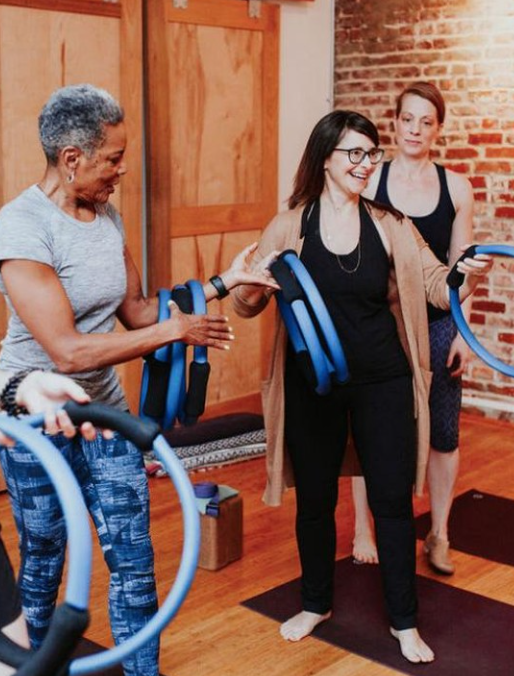
Pilates vs. Yoga? Both, Please.
But if you've been around Flow for a while, you know we've never been especially interested in staying inside one box.
Long before wellness trends started pitting one modality against another, our community was already moving between yoga, sculpt, Pilates, strength, meditation, recovery, and everything in between.
Most mornings, I wake up knowing there will eventually be a hot beverage involved. Usually it's coffee. French press. A little sugar. A little half-and-half. Nothing fancy.
On weekends, it's often chai. A slower ritual. A little more time. And every now and then, Ian will make one of his famous matchas or a perfect cup of Earl Grey.
Maybe that's why the whole yoga-versus-Pilates debate makes me smile a little. Lately, everyone seems to be asking people to choose. Yoga or Pilates? Strength or flexibility? Mindfulness or workout?
My answer is always the same: Why choose?
When we opened Flow more than two decades ago in Logan Circle, we did it because yoga changed our lives. We believed movement, breath, and community could help people feel more connected to themselves and to each other. Yoga was at the heart of that vision—and it still is.
But if you've been part of our community for a while, you know we've never been particularly interested in putting movement into neat little boxes. Long before wellness trends started pitting practices against one another, our students were already blending them naturally. A yoga class one day. Sculpt the next. Strength training. Meditation. Recovery work. A little of whatever their bodies needed that week.
We never saw these practices as competitors. We saw them as teammates because the truth is that different kinds of movement support us in different ways.
Yoga helps us build flexibility, mobility, balance, resilience, and the ability to slow down long enough to hear ourselves think. Pilates builds strength, stability, posture, and the deep core connection that supports everything else we do.
Strength training helps us stay powerful and capable as we age. Recovery practices help us actually absorb all the benefits of the work we're doing.
None of these replace one another. They work together.
And honestly, that's what real life looks like. Some days you want movement that feels grounding. Some days you want movement that feels energizing. Some days you want to sweat. Some days you want to stretch. Some days you need all of it.
That's part of why our Infrared Pilates classes have felt like such a natural addition to the schedule. The combination of intentional strength work, infrared heat, weights, props, and smart sequencing leaves people feeling stronger, taller, and more energized. And many of those same people are back on their mats for yoga later in the week.
Not because they're choosing sides. Because they're building a practice that supports their whole life.
As we put the finishing touches on our fall schedule, that's exactly what we're thinking about. How do we create more opportunities for people to move in ways that feel good? How do we make it easier for busy people to find classes that fit their energy, goals, and schedules? How do we continue evolving while staying rooted in what made Flow special in the first place?
You'll see more early mornings, more evening options, and more variety across the week. Yoga. Infrared Pilates. Mat Pilates. Strength. Sculpt. Recovery. Classes that help you sweat a little. Classes that help you slow down a little.
Not because we're trying to be everything to everyone. But because we've learned that most people thrive when they have options.
The best movement practice is the one that supports the season of life you're actually living right now.
So if you're looking for a place where you can build strength, improve mobility, find a little calm, challenge yourself, or simply take an hour to reconnect with yourself, we'd love to welcome you.
As for the debate?
We're not interested in picking a winner.
We're interested in helping people feel strong, balanced, connected, and well.
So we'll keep serving yoga, Pilates, strength, recovery, and all the things that help people feel their best.
And thankfully, our friends at Allelo in our P Street studio are happy to keep serving both coffee and chai. Between that and the complimentary organic tea waiting for you in our lounges, we're pretty big fans of having options.
Turns out you don't always have to choose.
What about you? Are you team yoga, team Pilates, or somewhere happily in the middle? We'd love to hear in the comments.
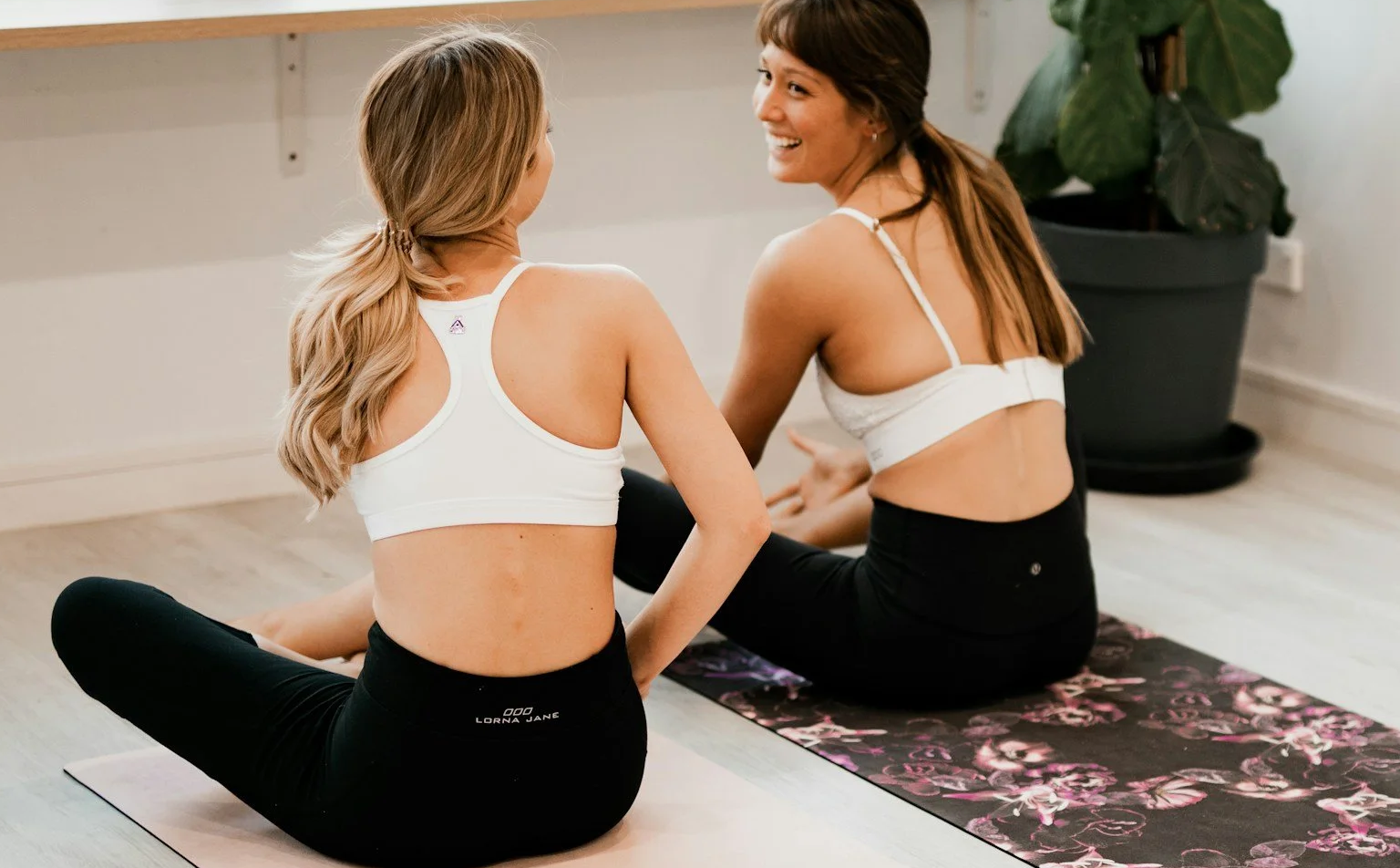
Why We Pay Yoga Teachers as W-2 Employees — And Why It Matters
Are you a studio trying to figure out if you should pay teachers as 1099’s or W2? This may help!
Over the years, we’ve loved connecting with and supporting other studios especially local, independently owned studios navigating the very real challenges of running a sustainable wellness business.
One conversation that comes up often in the yoga world is:
Should teachers be paid as 1099 contractors or W-2 employees?
Every studio is different, and every teaching relationship is different. This also isn’t legal or tax advice. But we do think it’s an important conversation especially as more local brands & the teachers that support them, want clarity around taxes, stability, protections, and what actually makes sense long term.
What’s the Difference?
1099 = Independent Contractor
A 1099 contractor is considered self-employed and running their own independent business.
Usually that means they:
control their own pricing and schedule
market themselves directly to clients
manage their own taxes
work independently from the business hiring them
W-2 = Employee
A W-2 employee is considered part of the business itself.
In many yoga studios:
the studio sets the class schedule
the studio handles booking and payments
the studio markets the classes
the studio provides the space and equipment
the teacher is part of the studio’s main offerings
Why This Matters in Yoga
A yoga studio’s primary business is teaching yoga classes.
So when teachers are regularly teaching scheduled weekly classes inside a studio’s systems and under the studio’s brand, many labor standards including factors commonly considered in DC and other states lean toward employee classification.
Again, every situation is different. But these are important things for both teachers and studio owners to understand.
If You’re a Teacher, Here Are Some Things to Consider
You may function more like a W-2 employee if:
the studio sets your schedule
you teach recurring weekly classes
the studio controls pricing
you use the studio’s booking systems
the studio markets the classes
you are asked to follow studio procedures, teaching standards, or policies
students view you as part of the studio staff
you are teaching the studio’s main service offering
For example, a plumber hired to repair a sink at the studio is clearly providing a separate outside service. Plumbing is not the studio’s primary business. That type of relationship is very different from a teacher regularly teaching yoga classes on the schedule each week.
A true independent contractor setup may make more sense if:
you run your own business and brand
you market directly to your own clients
you control your own pricing and scheduling
you rent studio space independently
you teach occasional workshops or pop-ups
you work project-to-project instead of as ongoing staff
you provide services outside the studio’s core operations
One Thing Many People Don’t Realize
Paying teachers as W-2 employees costs studios significantly more.
Studios often take on:
employer payroll taxes
unemployment insurance
workers compensation insurance
payroll processing
additional administrative and compliance costs
In many cases, this adds roughly:
8–15% or more per teacher.
For some studios, though, it feels worth it.
Not because it’s the cheapest option, usually it’s the opposite, but because it can create more clarity, consistency, and support for teachers long term.
Why Many Teachers Prefer W-2
1099 can sound appealing at first because of flexibility or potential write-offs.
But many teachers are surprised by:
self-employment taxes
quarterly tax payments
lack of unemployment protection
inconsistent income documentation
needing to manage everything themselves
W-2 employment can make life simpler in a lot of ways:
taxes are withheld automatically
income is easier to document for apartments or loans
unemployment protections may apply
workers compensation coverage may exist
pay feels more stable and predictable
And honestly, many teachers simply like feeling part of a team instead of feeling like gig workers floating from place to place.
Can Teachers Still Have Independent Income?
Absolutely. Many teachers also:
teach private clients
lead retreats
run workshops
create online offerings
coach clients
sell trainings or products
That independent work can often exist alongside W-2 studio teaching. For many teachers, the sweet spot becomes stable studio income & independent side offerings.
The yoga industry is still figuring a lot of this out.
Teachers and studios are trying to build more sustainable systems. And many people are simply trying to do right by their communities while navigating a complicated industry. If you’re a teacher, it’s worth understanding how you’re classified, why, and what structure actually supports your life best.
And if you’re a studio owner and you’re unsure about your setup, it’s always worth checking your local labor laws and speaking with a qualified accountant or employment attorney in your state.
We also genuinely love coaching other independently owned studios and sharing what we’ve learned over the past 20 years. We’re all figuring this out together, and supporting local wellness communities matters to us deeply.

The 13 Intentions Solstice Ritual: Holding What You’re Ready to Work With
The days between the winter solstice and the new year invite a different pace. The light is returning slowly. Nothing is asking to be rushed. This in-between space reminds us that growth doesn’t begin with certainty… it begins with attention.
The 13 Intentions Ritual is a way to meet the new year with both honesty and hope. It weaves together wishes you’re curious about, goals you’re ready to work toward, and resolutions that feel grounded rather than punishing.

The days between the winter solstice and the new year invite a different pace. The light is returning slowly. Nothing is asking to be rushed. This in-between space reminds us that growth doesn’t begin with certainty… it begins with attention.
The 13 Intentions Ritual is a way to meet the new year with both honesty and hope. It weaves together wishes you’re curious about, goals you’re ready to work toward, and resolutions that feel grounded rather than punishing.
The Practice
On the winter solstice, set aside a few quiet moments to write 13 intentions for the year ahead. These can be a mix of:
wishes you’re holding tenderly
goals you feel motivated to move toward
resolutions that feel supportive rather than strict
Some may be specific. Others may be open-ended.
You might write things like:
“Move my body with more consistency and kindness”
“Be braver in conversations that matter”
“Create more financial ease”
“Protect time for rest”
“Trust my instincts”
Write each intention on its own slip of paper. Fold them. Place them somewhere you’ll return to daily.
One Intention at a Time
Beginning on the solstice, each day you’ll burn one folded paper—without opening it.
Releasing Control, One Day at a Time
Beginning on the solstice, each day you’ll burn one folded paper, without opening it.
As it burns, take a breath and let yourself remember: effort matters, and so does trust. You are responsible for showing up but you don’t have to carry everything by yourself.
This is where the ritual softens. You’re offering the intention to the larger field around you—the timing you can’t control, the support you can’t always see, the unfolding that happens when you stay receptive.
You may notice doors opening unexpectedly. Or resistance showing up where something needs your attention. Both are information. Both are part of the support.
The Intention That Stays
On New Year’s Eve, one folded paper remains.
This is the intention you keep and the one that asks for your conscious participation. It may be a goal that requires steady effort, or a resolution that calls for honesty and follow-through.
Open it slowly. Sit with it.
Let it become a conversation between you and the year ahead. One where you do your part, and allow the universe to meet you halfway.
A Closing Thought
Not everything grows because we push. Not everything unfolds because we wait.
Some things happen when we show up with care and trust that life is supporting us in ways we don’t always need to understand.
That’s enough to begin.
xo
Debra (debra@flowyogacenter.com
A Mindfulness Tool I Keep Returning To: The RAIN Technique
The RAIN technique is one of those practices that I keep close to my heart because it’s so practical. I love that I can use it anywhere—whether I’m moving through the pace of DC life, sitting at my desk, or even before I step into a yoga class.
My hope is that this practice gives you the same sense of pause and presence that it gives me. Try it this week, and notice how it shifts the way you move through your day.
One of the questions I hear most often in our Yoga Teacher Training circles at Flow is:
“How can I help my students feel grounded and steady when I feel anything but steady myself?”
Yoga Teacher Training at Flow Yoga Center
I love this question, because it’s so real and because the answer is simpler than most people expect. Mindfulness doesn’t have to be complicated. It doesn’t require a week-long retreat or an hour-long meditation cushion sit. One of my favorite tools is a practice that takes only a couple of minutes and can be done anywhere, anytime.
It’s called the RAIN technique, and it has supported me personally for years. I often return to it when I need to pause, reset, and reconnect.
What Is the RAIN Technique?
RAIN is a mindfulness practice that stands for Recognize, Allow, Investigate, and Nurture. It was popularized by Tara Brach, and it’s such a beautiful reminder that presence and compassion are always available even when we can’t imagine it is.
Here’s how it works:
🌧️ R – Recognize
Pause and notice what’s happening. Maybe your mind is racing, maybe your shoulders are tight. Just name it.
🌧️ A – Allow
Let the feeling or sensation be there, without trying to fix it. This softening creates a little breathing room.
🌧️ I – Investigate
Gently ask: Where do I feel this in my body? What do I most need right now? Approach yourself with curiosity, not judgment.
🌧️ N – Nurture
Offer yourself kindness. Place a hand on your heart. Take a slow, grounding breath. Whisper a phrase like, “I’m okay. I’m here for me.”
The RAIN mindfulness technique works because it’s simple, portable, and effective. It interrupts the cycle of autopilot stress and brings me back to presence.
Mindfulness research shows that practices like RAIN can:
Reduce stress and anxiety
Build resilience
Improve focus and clarity
Strengthen self-compassion
But beyond the science, here’s what I notice: when I take two minutes to practice RAIN, I feel more steady, kind, and connected—not just with myself, but with the people around me.
How You Can Practice RAIN
The beauty of this practice is that it goes wherever you go. You can use RAIN…
Before a meeting or big conversation
On your commute
As a pause between tasks
Right before bed
Try this the next time you catch yourself rushing or getting stuck in thought:
Close your eyes and breathe.
Recognize what’s here.
Allow it to stay for a moment.
Investigate with curiosity.
Nurture yourself with care.
That’s it. You’ve just practiced a two-minute meditation.
The RAIN technique is one of those practices that I keep close to my heart because it’s so practical. I love that I can use it anywhere—whether I’m moving through the pace of DC life, sitting at my desk, or even before I step into a yoga class.
My hope is that this practice gives you the same sense of pause and presence that it gives me. Try it this week, and notice how it shifts the way you move through your day.
With warmth,
Debra 🌿💛
Softening as Strength: The Science and Practice of Letting Go
You might recognize the pattern: keeping it all together for everyone else, functioning at a high level, praised for being “capable”—yet inside, there’s a crash waiting, a shutdown you can feel hovering in the background. It’s the invisible weight no one else sees but you.
What you may need isn’t more willpower, but a gentle nervous system reset Each time you step on the mat, you’re not just stretching muscles—you’re training your brain and body to access calm more easily.

The Invisible Weight We Carry
Burnout isn’t always about doing too much. Often, it’s about holding too much. The expectations, the unspoken responsibilities, the constant bracing and absorbing all live in the body, even when we try to keep going as if nothing is wrong. This is where true burnout recovery begins: not with another productivity hack, but by noticing what you’ve been carrying.
You might recognize the pattern: keeping it all together for everyone else, functioning at a high level, praised for being “capable,” yet inside, there’s a crash waiting, a shutdown you can feel hovering in the background. It’s the invisible weight no one else sees but you.
It’s not laziness. It’s not lack of discipline. It’s your nervous system, overtaxed and trying to survive. What you may need isn’t more willpower, but a gentle nervous system reset. Research shows that when we practice slow, intentional movement and deep breathing, the parasympathetic nervous system activates. This helps regulate cortisol levels, reduces heart rate, and signals to the body that it is safe to release its constant state of vigilance.
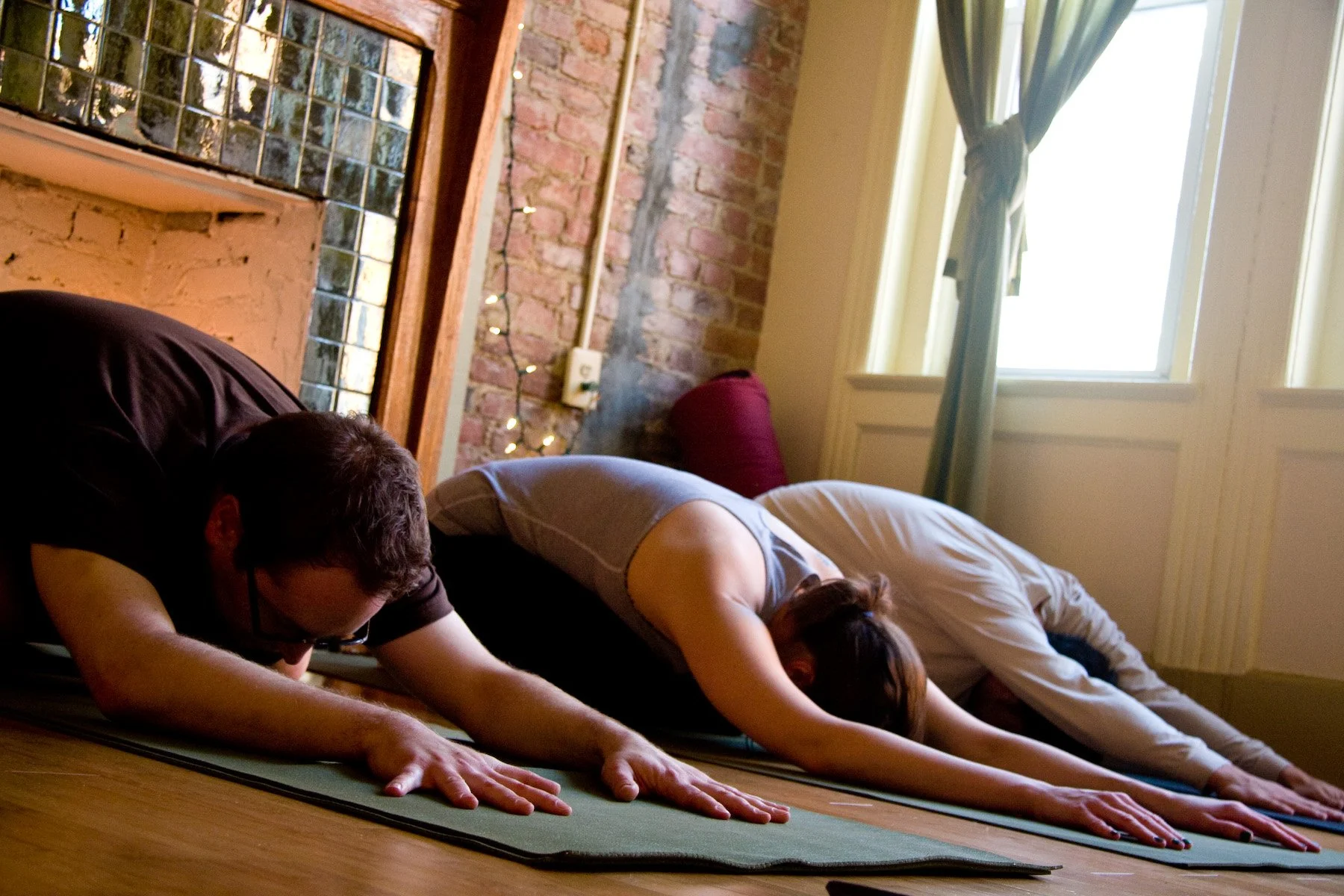
Yoga doesn’t erase these invisible weights, but it gives us a way to set them down for a while. On the mat, you practice more than movement—you practice allowing. Allowing the breath to soften the grip of your nervous system. Allowing your body to remember what it feels like not to brace, not to overfunction, not to hold everything alone. Through mindful movement, you begin to re-train your body to release instead of tighten.
A few times a week, even just for 45 minutes, yoga offers rehearsal space for a different way of being.
Your body learns safety in receiving support from the ground, the quiet work of rest and restoration.
Your nervous system practices downshifting from emergency mode into presence, building emotional resilience that carries into daily life. Your identity slowly expands beyond overfunctioning, beyond being “the capable one,” creating the foundation for sustainable well-being.
Neuroscientists often remind us that repetition rewires the brain. That’s why a consistent yoga practice matters. Each time you step on the mat, you’re not just stretching muscles—you’re training your brain and body to access calm more easily, even in moments of stress. Over time, softening becomes a skill rather than an accident.
And perhaps most importantly, you get to experience moments where you don’t have to carry it all. Where you can simply breathe, move, and belong. In practice, you’re reminded that strength isn’t only about pushing forward. It’s also about softening.
That’s the quiet gift of yoga. It helps us remember that resilience doesn’t come from holding tighter. It comes from letting go, even briefly, and trusting that the world won’t fall apart if we soften our grip.