
Connection, Addiction, Worthiness, and Blur.
In all our life's experiences there is one underlying commonality that moves through everyone, whether we are at the beginning or end of our life. The undercurrent of life is connection. It is the vital fluid that keeps all relationships, regardless of their depth or duration, salient and purposeful.

Congratulations on being alive everyone!
In all our life's experiences there is one underlying commonality that moves through everyone, whether we are at the beginning or end of our life. The undercurrent of life is connection. It is the vital fluid that keeps all relationships, regardless of their depth or duration, salient and purposeful. When we are able to experience connection in its positive expression it is joyful, rewarding, inclusive, nourishing and uplifting. When it is expressed in unhealthy ways it becomes obsession, violence, exclusion/isolation, abusive, and lacks dignity or respect. Both forms of connection are present in some way in everyone's lives, and it is our awareness of the necessity for positive connections that allows us to choose to engage in relationships that are meaningful and supportive and rest in the goodness and worthiness of our own being.
In conversation I have heard myself and others say things that reflect a deeply held belief that in some way we are unworthy or not good enough to have positive and healthy relationships with others. This is a subtle form of self-deprecation and self-harm that can be tricky to identify in our behavior and leads us to making decisions that while appearing to fulfill our desires are ultimately in effect self-sabotage or at worse self-deception. Part of what makes relating to others challenging is the social context that creates the habit of believing that relationships need to fit into certain categories, or have certain characteristics. Every being we interact with is in a relationship with us, regardless of how they appear to look.
When we try to impose our ideas on reality we create a tremendous amount of suffering for ourselves and other people. One of the most intense and confusing ways we can disable ourselves is through addiction. This beautiful short video shows that there is old research showing addiction can be rooted in an unfulfilled need for connection rather than chemical dependency. Addiction, like depression, anxiety, or suicidal thoughts have been taboo in most cultures such that avoidance, judgement, ostracizing, and discarding people were the standard method of not meeting the issues. It is no wonder, then, that we find ourselves amidst a burgeoning movement of folks working toward opening the doors on family histories, cultural repression, and social transparency. There are no limits to theways we can start to heal ourselves from the burden of seeking connection in unhealthy ways, and the trauma that causes ourselves and each other.
To put us all on the right track, what if we made a pact with ourselves to cherish and invest in the relationships we do have?
What if we agreed that all people who we meet, regardless of the situation and how we perceive them, are delicate, sensitive, exquisitely intricate, and beautifully simple creates that occupy this life-giving planet that sustains us all equally?
What if we made a commitment to our own dignity, and already complete worthiness, to choose those relationships that foster and blossom our own already present beauty, gentleness, strength, capability, and compassion?
Our lives are valuable and worth living because we are connected. Our worthiness and goodness is guaranteed by our birth and does not come as a result of our actions - it is always with us. Our "work" is to be clear with ourselves about all the ways we close ourselves off to the connections we already have, and do what we need to do in order to foster and invite those connections that firmly place us within the context of our life, whatever it looks like, in a healthy, wholesome, and genuine way. No one else can do this work for us, and we are not responsible for doing it for anyone else. We are here to support each other and together we are strong. The secret, like the name of this Blur song from 1998, is to be with the part of ourselves that is Tender.
"Come on get through it.
Love's the greatest thing that we have..."
Or you could live like this person:
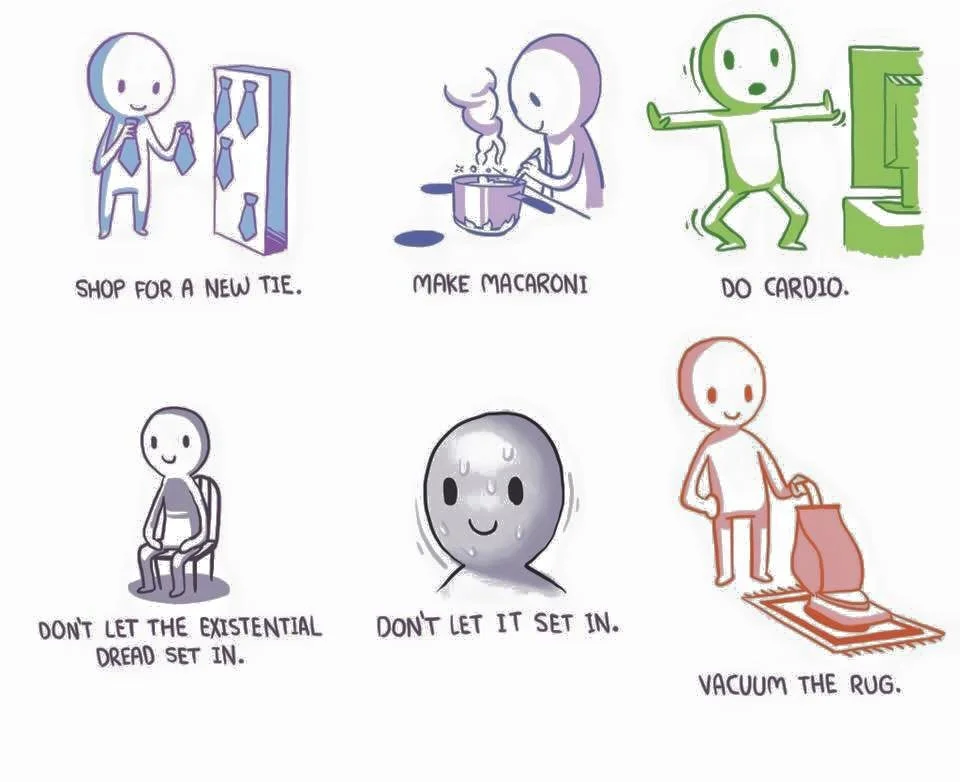
May we remember that we live in a world full of people, just like us, doing their best to live as best as they can. May we stay warm and open to those connections that remind us how fabulous it is to be alive!
Om,
Aqeel
All is Coming?
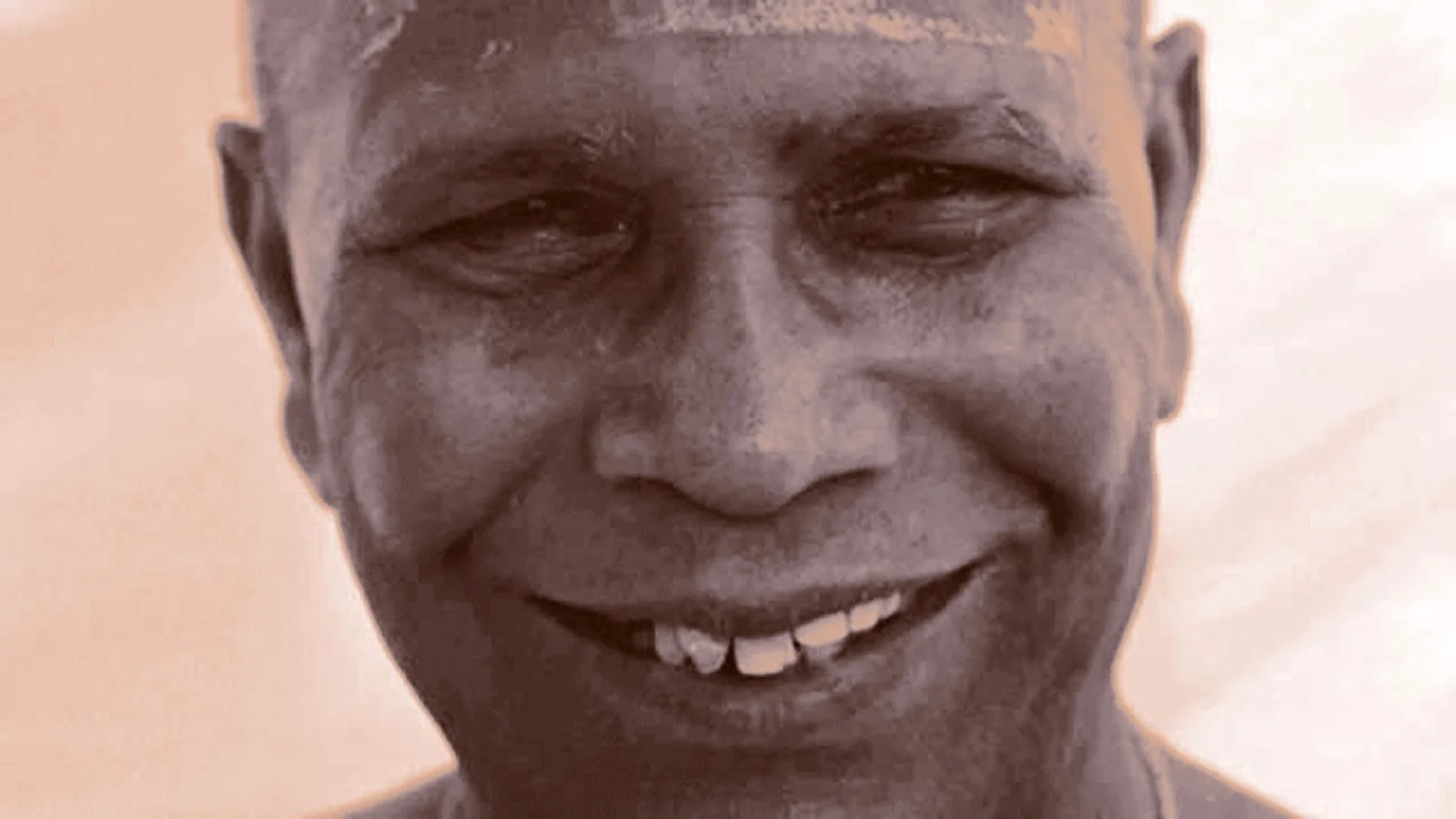
Pattabhi Jois, the father of Ashtanga, was notorious for rarely giving straight answers to questions. Whether it was a language barrier or just his cryptic charm, he would often respond, "Do your practice and all is coming."
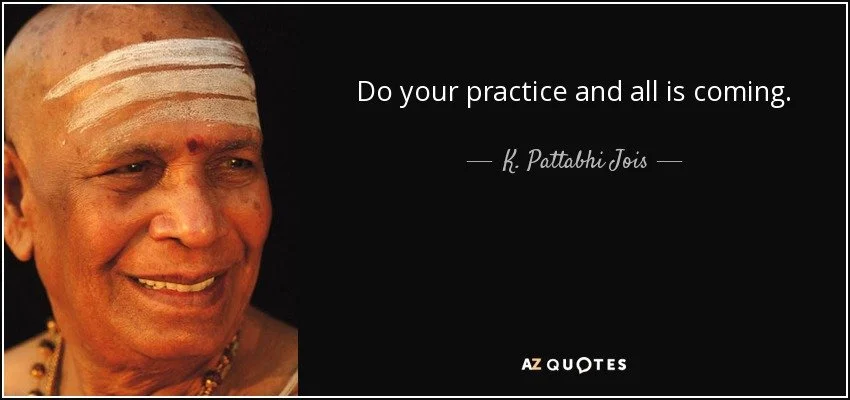
Pattabhi Jois, the father of Ashtanga, was notorious for rarely giving straight answers to questions. Whether it was a language barrier or just his cryptic charm, he would often respond, "Do your practice and all is coming."
Some interpret this to be a transactional statement, that Guruji was promising that you would attain what you desire over the course of time, so long as you continued to practice Ashtanga.
Instead, perhaps he was really saying, "Do your practice because all is coming."
In your practice, you will face adversity. You'll fall. You'll be asked to do things you can't do. You'll face injury and embarrassment and learn a lot about yourself in the process. This is good training for life.
Yoga doesn't promise that you'll master handstand in your lifetime. But it does promise to better prepare you for the things that actually matter that lie ahead.
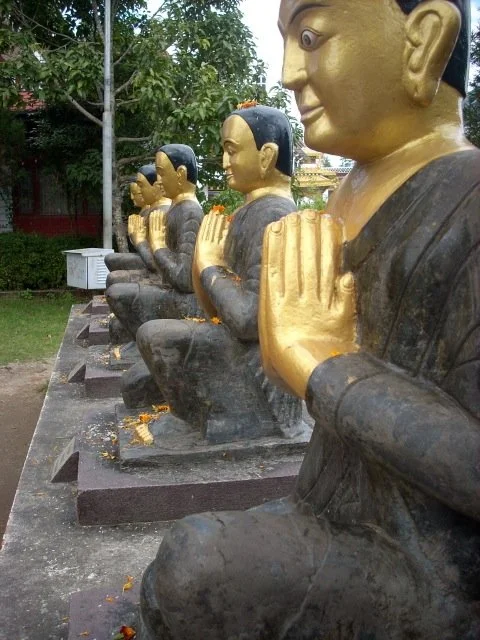
Vastu-samye – Do You See What I See??
Each individual person perceives the same object in a different way, according to their own state of mind and projections. Everything is empty from its own side and appears according to how you see it. (PYS IV.15 translation from Jivamukti Yoga Chant Book)
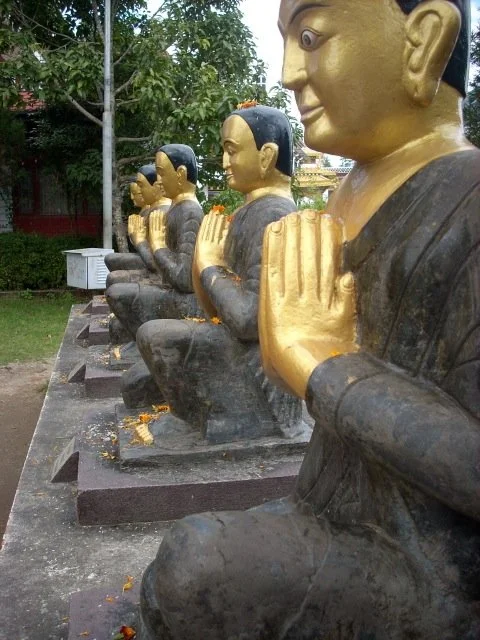
Vastu-samye – do you see what I see??
vastu-sāmye citta-bhedāt tayor vibhaktaḥ panthāḥ
Each individual person perceives the same object in a different way, according to their own state of mind and projections. Everything is empty from its own side and appears according to how you see it. (PYS IV.15 translation from Jivamukti Yoga Chant Book)
It’s about perspective. Yours and mine. The objects of the material world – prakriti – that surround each and every one of us, are what they are. And yet, we each see something different. We perceive something different than the person standing right next to us for everything we see. This is true on a very practical, gross level and can be validated by simply placing the same object in front of 2 people and independently asking them to describe it. You will get different answers.
But, the more interesting side of this concept can be explored when we go deeper – beyond the obvious and into the subtle aspects of our perception. Why do we perceive differently? Well, because we each have uniquely colored/influenced thought patterns. And those thought patterns determine our response.
PYS I:5 says, vrttayah pancatayyah klista aklista – we have 5 categories of thought patterns and they are either klista meaning colored, afflicted by the kleshas or hindrances to yoga or not (aklista). These hindrances come about due to ignorance of Self, inflated ego, attachment to pleasure, aversion to pain, and clinging to life.
The yogi’s thought patterns begin to change dramatically when he accepts concepts such as emptiness, soul/Self, samskara and samsara. He begins to put everything in the light of the Self and under the scope of our ultimate reality – purusha. Purusha is the changeless reality, the lifeforce we all share that lies beneath the material world – prakriti. Purusha is not affected by the goings on of the world, and yet it remains the constant, strong, energetic force that supports the world. Without it prakriti would not exist and vice-versa.
The yogi’s perspective becomes tempered by the knowledge of purusha. He is less disturbed by what’s happening outside himself. His thoughts are less and less disrupted by the tragedies of the world. It’s not that he doesn’t care, he does, deeply. But, he accepts that the material world is one of change and his place in it is temporary. His efforts become increasingly directed at connecting more fully with his eternal, blissful, Self. There is nothing that has greater impact on his awareness of the objects placed before him. That impact is one of equanimity that brings a calmness to his existence. From this place he can operate in the world with great passion, but limited attachment. The ups and downs, successes and failures, do not have the impact on his efforts that they once did. He is able to stay the course, stay on the path, do the work – because it’s the right thing to do, not because he is seeking material, or even spiritual, gain. As Barbara Stoler Miller wrote in “Yoga – Discipline of Freedom”, “The path to freedom consists of a gradual unwinding of misconceptions that allows for fresh perceptions.”
For more on this sutra, see the Jivamukti Focus of the Month for March – “The Reality of the Enlightened Mind” written by Gabriella Bozic: http://jivamuktiyoga.com/teachings/focus-of-the-month/p/reality-enlightened-mind
When X Happens, Then Y Will Happen....Right?
Does it ever feel like life is filled with, “When x happens, then y will happen”? When I recently returned from vacation, it was only a couple of hours before I found myself wishing that I was headed back out on holiday again. I even had the thought, “When I go on vacation, then I will really be able to relax,” and I had just returned! I was shocked to find out how quickly my mind had slipped into planning mode and other thoughts like, “When I get home after work, then I will feel better. When the weather is warmer, then I will exercise more and be able to get back into shape." It doesn't take much for us to act as if what we are looking for in life is somewhere else or sometime in the future. Like John Lennon said, “Life is what happens to you while you're busy making other plans.”
Does it ever feel like life is filled with, “When x happens, then y will happen”? When I recently returned from vacation, it was only a couple of hours before I found myself wishing that I was headed back out on holiday again. I even had the thought, “When I go on vacation, then I will really be able to relax,” and I had just returned! I was shocked to find out how quickly my mind had slipped into planning mode and other thoughts like, “When I get home after work, then I will feel better. When the weather is warmer, then I will exercise more and be able to get back into shape." It doesn't take much for us to act as if what we are looking for in life is somewhere else or sometime in the future. Like John Lennon said, “Life is what happens to you while you're busy making other plans.”
On one hand, preparations and planning are necessary and it does no good to condemn ourselves when our sweet little egos try to protect themselves with planning. On the other hand, all we are searching for is here, and when we truly know THAT, we are less impacted by the constant mental acrobatics. How to we make sense of this? The Yoga Sutras give us great insight into this point.
Yoga Sutra 1.2
Yogah cittavrttinirodhah
Yoga is when we abide in and as our True Nature – Stillness- that is without movement, whether the mind, which is the movement of thought, is in movement or not. (Translation by Richard Miller)
When we find ourselves battered with too many thoughts or caught in planning mode, it can be helpful to recall that even unruly or unpleasant thinking can serve as a pointer to what IS. While most translations of this yoga sutra simply state that “yoga is the cessation of the movements of the mind,” I prefer Richard Miller’s translation. Simply put, it feels more accurate: a welcoming of what IS. Instead of doing battle with my thoughts and trying to get them to be still, quiet, or more spacious, I can simply set thinking free and rest in the backdrop of what IS. Of course, the ego has preferences, it would like the mind to be calm, and peaceful and still. Thank goodness that we are so much more than our minds! The stillness spoken of here is subtle and visceral. Next time you notice your planning mode or are feeling the mind spitting out thought after thought, see what happens if you settle into the background. This is where a short body scan can really help. Feeling first into the physical body, helps us begin to make contact with what IS. Note, both the tensions and the softness of the body are felt with quiet curiosity. While the thoughts come and go, is it possible to feel into what else is present?
Nondual Writings:
I'm back home again, and I've always been here.
Standing at the base of the ski slope, waiting for my friend, and the waiting happens in This.
Eating strange food in a dark tavern in a foreign land and the new tastes are coagulations in This and as This.
Smiles and joy bursting forth while the sled dogs yip and howl as we prepare the sleds for mushing; all unfolds in This and as This.
Back outside my apartment, the morning after a long flight, the seagulls float on the river current in one direction and fly back in the opposite direction to float down the river again. They fly and land and float and This unfolds in them and as them.
Life is so full of happenings, arising from This, moving through This, superimposed on This.
I am back home again, and I've always been here.
Angela Cerkevich
Angela is a treasure at Flow. She leads our Hatha Yoga and our Yoga Nidra classes and has a private Psychotherapy Practice in DC.

Jai India! Birdsong brings relief.....
Birdsong by Rumi
Birdsong brings relief
to my longing
I'm just as ecstatic as they are,
but with nothing to say!
Please universal soul, practice
some song or something through me!
I’ve never really been able to “get into” poetry. I’ve tried. Many times, and with various motivations ranging from thinking that I “should” like it to hoping that I might feel something. And there have been a few occasions where it hit home. Like the time our dear friend Becky wrote a heartfelt poem and read it at our wedding. That was a special moment.

Jai India!
Birdsong by Rumi
Birdsong brings relief
to my longing
I'm just as ecstatic as they are,
but with nothing to say!
Please universal soul, practice
some song or something through me!
I’ve never really been able to “get into” poetry. I’ve tried. Many times, and with various motivations ranging from thinking that I “should” like it to hoping that I might feel something. And there have been a few occasions where it hit home. Like the time our dear friend Becky wrote a heartfelt poem and read it at our wedding. That was a special moment.
And then I met David Garrigues. He’s the teacher I followed to India and studied with this past month. He’s passionate about yoga and it fires me up. He reads poetry. And it fires me up. He read the one above when I first met him in November and it woke me up.
You see, I believe that even though we all come to yoga in our own time and in various ways, the one thing we all have in common is that we’ve done it before. In a previous life. Sharon Gannon (co-founder of Jivamukti Yoga) was the first person I ever heard say this. At the time I really didn’t know what to make of it, let alone believe it. But, as the years have passed and my experience has deepened, I have come to appreciate this concept and believe it to be true.
We live in a time when it has become increasingly challenging to connect with the source of our being. That source is most evident, most available, in the natural world – in places where it’s easier to find solitude, where it’s easier to touch nature. India offers this. Underneath all the craziness there’s a hum, the Om – the sound of the universe. It’s always there, no matter where we find ourselves, but it seems easier to access there.
Yoga plants in us a seed. This seed is much like those found in nature that take some energy to germinate and grow. Like that, our seed, sabija, is there waiting to take root and grow. “Sa” means “with”; and “bija” means “seed”, “cause” or “origin”. It is the Sanskrit term used to describe the first stage of samadhi or enlightenment, the 8th limb of Patanjali’s Ashtanga Yoga system and the ultimate goal of the yoga practice. This bija or seed has its origin in samskara, that being imprints left on the mind by objects we perceive and in the case of samadhi, the object of our meditative focus. Samskaras, if left unresolved, carry forward from one life to the next bringing our essence back to this material world. Knowing and accepting this as truth makes all the inexplicable events of our lives a lot less disconcerting because it suggests that some of our past actions are coming to fruition from existences we don’t even remember.
Yoga Sutra I.46 says, “ta eva sa-bijah samadhih”, which means “These samapatti (cognitive blending) states are known as sabija samadhi - cognitive absorption ‘with seed’.” In sabija samadhi we are experiencing something, including the very highest and sattvic (peaceful, pure, uplifting) things that can be experienced. The thinker and the thought remain; the experiencer and the experience, the Seer and the seen – all remain.
So, we can choose to practice yoga and we can choose to make that practice one of devotion, of longing to serve as a vehicle for the universal song. That’s the spark to ignite sabija and put us on the path toward ultimate liberation and the next stage of samadhi where there is no samskara, no seed.
I went to India with no expectations, only the intention to work hard, focus on my practice, devote my efforts to those who pay me the great honor of attending my classes, and be open to the teachings from David and from India herself. I left feeling satisfied that my intention carried me through.